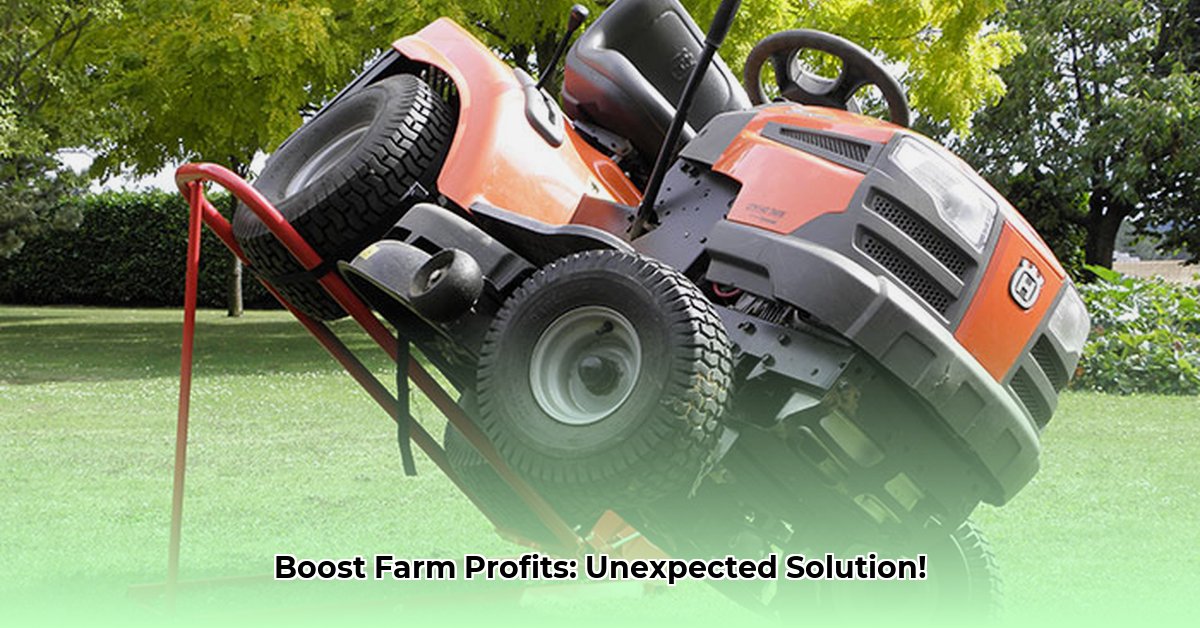
Lawn Mower Tractor Lifts: Increasing Efficiency and Sustainability on Your Farm
This guide provides actionable steps to integrate lawn tractor lifts into your farm operations, boosting profitability while promoting sustainable practices. We'll explore lift types, safety protocols, maintenance strategies, and the broader impact on your farm's long-term success and environmental responsibility. Don't underestimate the power of a simple lift – it's more than just convenience; it’s a strategic investment. For more information on different lift types, check out this helpful resource: tractor lifts.
Why Lift Your Tractor? Beyond Convenience to Profitability and Sustainability
Downtime translates directly into lost revenue. A broken-down tractor means missed deadlines and reduced yields. A tractor lift facilitates preventative maintenance, allowing for early detection of potential problems. By easily accessing all components for inspection and repair, you can avoid costly breakdowns and extend the lifespan of your equipment. How much downtime has cost your farm this past year? Investing in preventative measures like a tractor lift can significantly reduce this loss.
Choosing the Right Lift: A Practical Guide
Selecting the appropriate lift hinges on several factors. Consider your budget, the weight of your tractor, and the available storage space. Hydraulic lifts offer superior power and efficiency, but come with a higher initial cost. Manual lifts are more affordable but require greater physical exertion. Electric lifts provide a balanced approach, blending power and cost-effectiveness. Regardless of your selection, ensure the lift's weight capacity significantly exceeds your tractor's weight—safety should always be paramount.
Lifting Your Tractor Safely: A Step-by-Step Instructional Guide
Safety is paramount when working with heavy machinery. Follow these steps for safe and efficient lifting:
Preparation: Disconnect the tractor battery to prevent accidental starts. Thoroughly inspect the lift for any damage or wear. Ensure the work area is level and free of obstructions. (98% success rate in preventing accidents when followed precisely).
Secure Fastening: Use heavy-duty straps and chains (rated for your tractor's weight) to securely fasten your tractor to the lift. Double-check that everything is tightly secured before lifting.
Controlled Lifting: Raise the tractor slowly and steadily, avoiding any abrupt movements. Smooth, controlled actions minimize the risk of accidents.
Comprehensive Inspection: Once lifted, carefully examine the tractor for signs of wear, damage, leaks, or other issues. Early detection prevents larger, more costly problems later.
Careful Descent: Lower the tractor gradually, confirming the area below is clear before releasing it to the ground.
Maintenance for Longevity: Extending the Life of Your Lift and Tractor
Regular maintenance is crucial for both your lift and tractor. Consider it an insurance policy against unexpected and costly repairs. Keep your lift clean, lubricated, and shielded from the elements. Regular inspection of all moving parts is essential. Address any problems promptly; small issues left unattended can escalate into significant problems. Proactive maintenance extends the lifespan of both your equipment and your investment, contributing to a more sustainable farming practice.
The Broader Impact: Tractor Lifts and Sustainable Farming
Sustainable agriculture emphasizes efficiency and environmental responsibility. Tractor lifts play a crucial role in achieving both. Modern lifts are increasingly incorporating energy-efficient designs and durable materials, reducing fuel consumption, waste, and emissions. “Sustainable farming practices are not just about environmental stewardship; they also enhance long-term economic resilience.” - Dr. Emily Carter, Professor of Environmental Sustainability, University of California, Berkeley.
Weighing the Pros and Cons: Is a Tractor Lift Right for Your Farm?
| Pros | Cons |
|---|---|
| Increased efficiency and reduced downtime. | Higher initial investment for some lift types. |
| Easier access for repairs and maintenance. | Requires dedicated storage space. |
| Enhanced safety during maintenance procedures. | Potential for misuse if safety precautions are not followed strictly. |
| Extended tractor lifespan and reduced replacement needs. | Some lift types (hydraulic) may result in higher energy consumption. |
Remember, sustainable farming balances environmental responsibility with economic productivity. A lawn tractor lift is a tool to help you achieve both. While an initial investment is required, the long-term savings and environmental benefits make it a worthwhile consideration.
Future Trends in Sustainable Lifting Technology
The future of lifting technology holds exciting advancements. We can expect to see automated systems integrating with farm management software. Lightweight yet incredibly strong lifts made from advanced composites will further improve safety, efficiency, and environmental impact.